Kicking off with bitcoin what is money, we delve into the intriguing world of digital currency that has captured global attention. Bitcoin, born from the desire for a decentralized financial system, challenges traditional notions of money and offers a new way to understand value in our increasingly digital age.
From its underlying blockchain technology to its unique characteristics as a form of currency, Bitcoin has sparked conversations about the future of finance, the evolution of money, and the very essence of trust within financial systems.
Introduction to Bitcoin
Bitcoin is a digital currency that emerged in 2009, created by an anonymous person or group using the pseudonym Satoshi Nakamoto. It was designed as a decentralized alternative to traditional currency, allowing peer-to-peer transactions without the need for intermediaries like banks. The fundamental technology behind Bitcoin is blockchain, a distributed ledger that records all transactions across a network of computers.
This innovation not only ensures transparency but also enhances security, making it difficult to alter transaction records. In the context of digital currency, Bitcoin has gained significant attention as it challenges conventional financial systems and offers an innovative way to think about money.
Definition of Money
Money, in its simplest form, is an accepted medium of exchange for goods and services. Throughout history, the concept of money has evolved significantly. Initially, societies relied on barter systems, trading goods directly. Over time, precious metals like gold and silver became standard forms of money due to their inherent value. The characteristics that define money include portability, durability, divisibility, uniformity, limited supply, and acceptability.
These traits ensure that money can effectively facilitate transactions and store value.
Comparison of Bitcoin and Traditional Money
When comparing Bitcoin with traditional fiat currency, several advantages and disadvantages emerge. One advantage of Bitcoin is its decentralization, which eliminates the need for a central authority, potentially reducing transaction fees and processing times. However, Bitcoin’s volatility can be a disadvantage, as its value can fluctuate dramatically in short periods. Transactions methods between Bitcoin and traditional money differ significantly. While traditional money transactions often rely on banks and payment processors, Bitcoin transactions are conducted directly on the blockchain.
Central banks play a crucial role in regulating fiat currencies, influencing supply and interest rates, whereas Bitcoin operates independently of such institutions.
Bitcoin as a Store of Value
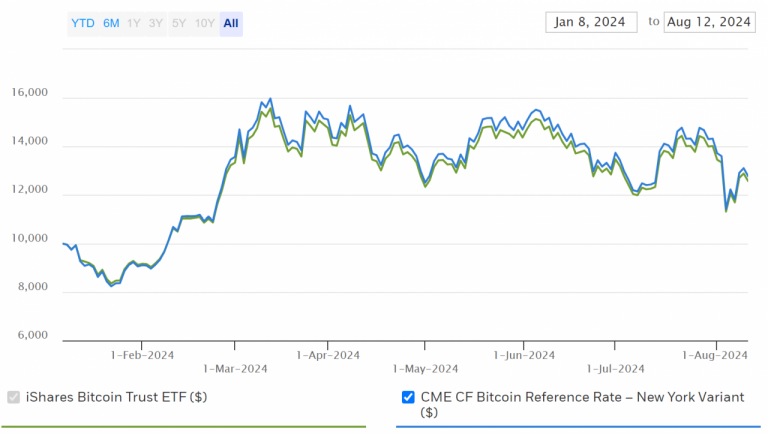
Bitcoin is often compared to gold in terms of its function as a store of value. Like gold, Bitcoin has a limited supply, which can make it more appealing during times of economic uncertainty. Market trends have shown that Bitcoin can retain value over time, particularly during inflationary periods. However, its volatility poses challenges; significant price swings can undermine its effectiveness as a reliable store of value.
Historical examples, such as Bitcoin’s surge in 2020 amidst economic stimulus measures, illustrate its potential to act as a hedge against traditional currencies.
The Role of Trust in Money
Trust is a foundational element in traditional financial systems, relying heavily on institutions like banks to maintain security and legitimacy. Bitcoin creates trust through decentralized consensus, where transactions are verified by a network of users rather than a single entity. This model reduces the risk of fraud and manipulation, as trust is distributed among participants. In contrast, trust issues in traditional money often require regulatory oversight and insurance mechanisms to protect consumers, whereas Bitcoin’s trust is built into the technology itself.
Practical Uses of Bitcoin
Bitcoin has several practical applications in everyday transactions. Individuals can use Bitcoin for online purchases, remittances, and even to pay for services in various sectors. A growing number of businesses, ranging from large retailers to small cafes, accept Bitcoin as a payment method, further integrating it into the economy. Notably, Bitcoin is increasingly used for international remittances, offering a faster and often cheaper alternative to traditional money transfer services.
This capability can be particularly advantageous in regions with limited banking infrastructure.
Regulatory Challenges and Future of Bitcoin
Despite its growing popularity, Bitcoin faces numerous regulatory challenges. Governments worldwide are still grappling with how to classify and regulate cryptocurrencies. Issues such as tax implications, anti-money laundering (AML) compliance, and consumer protection are at the forefront of discussions. Looking ahead, Bitcoin holds significant potential to impact the global economy. As more individuals and institutions adopt it, the evolving legal landscape surrounding digital currencies will likely shape its future.
The balance between regulation and innovation will be crucial for Bitcoin’s sustainability and acceptance in the financial system.
Final Review
In conclusion, the exploration of bitcoin as a form of money reveals its potential to redefine our understanding of currency in the digital era. As we navigate the complexities of regulation and trust, Bitcoin stands at the forefront of a financial revolution, urging us to rethink the nature and function of money in our lives.
Questions Often Asked
What is Bitcoin?
Bitcoin is a decentralized digital currency created in 2009, allowing peer-to-peer transactions without the need for intermediaries.
How is Bitcoin different from traditional money?
Unlike traditional money, Bitcoin operates on a decentralized network and is not controlled by any government or central authority.
Can Bitcoin be used for everyday purchases?
Yes, many businesses now accept Bitcoin as payment for goods and services, making it increasingly practical for everyday transactions.
What makes Bitcoin valuable?
Bitcoin’s value is derived from its limited supply, demand, and the trust users place in the technology and network.
Is Bitcoin safe to use?
While Bitcoin transactions are secured by blockchain technology, users must take precautions to protect their wallets and private keys from potential threats.